


Guarding Your Assets with a Professional Team. Diversify Investments: Smartly Seek Profit Opportunities
Suitable for Dealing with Market Changes
Diversified Investments to Reduce Risk
Fund Units Available for Buying and Selling at Any Time
Low Entry Barrier


What is a fund?
A fund is a collective pool of funds contributed by multiple investors, which is then used to invest in various assets such as stocks, bonds, money markets, etc. It is managed by a professional team or fund manager. The fund manager, based on the fund's investment objectives and strategies, is responsible for selecting and managing the investment portfolio, aiming to achieve returns for the investors. Investors purchase units or shares of the fund, allowing them to share in the profits and risks associated with the fund's investment portfolio.

Advantages of Investing in Funds

Professional Management
Funds are managed by professional teams or fund managers who make informed investment decisions based on market conditions and investment objectives. Their expertise and experience help optimize returns and effectively manage risks.

Diversification
Funds allocate investments across different asset classes such as stocks, bonds, currencies, etc., achieving diversification and hedging against various markets and industries.
Liquidity
Investors can buy and sell fund shares in the fund market as per their needs, providing relatively high liquidity and enhancing the flexibility of funds.

Small Investments
Funds typically allow investments with smaller amounts, making them suitable for various types of investors. Even with limited funds, investors can start building their investment portfolios.
Follow Smart
Developed by the uSMART Investment Research Team, the "Balanced Combination of Growth and Preservation" Asset Allocation Strategy.
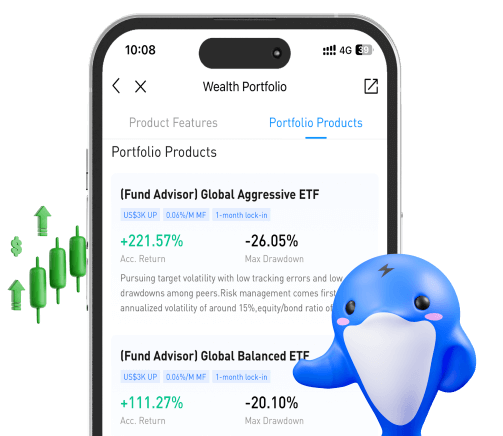

Constantly monitor market dynamics

Real-time adjustmento f positions

Increase returns while reducing risk

Optional starting investment threshold
Why Choose uSMART Investment Funds

Double Buying Power
Access 50% of your funds anytime to buy stocks, making portfolio turnover easier!

0 Transaction Fees
Trade without the burden of fees, have full control over your buying and selling!

No Lock-in Period for Funds
Flexibly buy and sell, with no restrictions on fund movements!

Starting from USD 100
Easily surpass the ultra-low threshold!
FAQs
How do I choose the right investment fund for myself?
When choosing an investment fund that suits you, consider the following factors:Investment objectives - Determine your investment goals, such as long-term growth, income generation, or risk control.Investment risk - Assess your risk tolerance and select a fund with a risk level that aligns with your risk capacity.Fund types - Select funds that align with your investment preferences, such as stock funds, bond funds, or mixed funds offered by uSMART.
What are the risks associated with investing in funds?
Factors such as market volatility and industry risks can affect market fluctuations, thereby increasing market risk and negatively impacting the value of the fund. Additionally, factors such as low market liquidity and redemption restrictions may prevent investors from buying or selling fund shares quickly, leading to higher liquidity risk. Furthermore, the investment decisions and performance of fund managers may not meet expectations, increasing management risk.
How do I evaluate the performance of an investment fund?
The uSMART app provides various indicators to evaluate the performance of investment funds, such as annualized return, cumulative return, and comparison with respective benchmarks. Users can also consider factors such as historical performance trends, risk-adjusted returns, and fee structures to assess fund performance or even the relevant fund managers' professional experience. Users can even watch videos introducing fund companies produced by uSMART in the app to gain a more detailed understanding of the fund company's background and past performance.
What expenses are included in fund fees?
Fund fees include management fees, sales charges (such as sales commissions or front-end loads), redemption fees (such as redemption commissions or back-end loads), and other expenses (such as auditing fees and administrative costs). These fees are deducted from the fund's assets and may impact investment returns.
CS Hotline: +852 3018 4526
Trading days: 24 hours | Non-trading days: 9:00-18:00
Email: cs@usmart.hk
WhatsApp: +852 5989 2641


